Dry Mixed Recycling — or DMR — is one of the most common waste streams for businesses, but it's also one of the most misunderstood. Contamination is a significant problem in the recycling industry, and putting the wrong materials in your DMR bin can result in the whole load being sent to landfill rather than being recycled.
What Is DMR?
DMR is a combined recycling stream that accepts multiple types of dry recyclable materials in a single bin, without the need to sort them. It's sometimes called mixed recycling or commingled recycling. It's collected separately from general waste and sent to a Materials Recovery Facility (MRF) where the different materials are separated and processed.
What CAN Go in a DMR Bin?
The following materials are generally accepted in DMR collections: paper and cardboard (flattened), plastic bottles and containers (rinsed), food and drink cans (rinsed), aluminium foil (clean), plastic trays and pots (rinsed), cardboard packaging and cereal boxes, newspapers and magazines, and office paper. If in doubt, rinse it out — contamination from food residue is one of the most common reasons recyclable material ends up in landfill.
What CANNOT Go in a DMR Bin?
The following should NOT go in your DMR bin: food waste (even scraps), glass bottles and jars (these go in a separate glass bin), plastic bags and film, polystyrene packaging, tissues and paper towels, nappies and hygiene products, electrical items, and general waste. Glass is a particularly common source of confusion — it needs to be collected separately because it can contaminate and damage other recyclable materials during processing.
Why Does It Matter?
Contaminated recycling loads cost money. If your DMR bin contains too many non-recyclable items, the entire load may be rejected and sent to landfill — meaning you've paid for a recycling service but achieved nothing. For businesses, poorly managed recycling can also create issues with Environment Agency compliance audits.
Glass — A Separate Stream
Glass bottles and jars must be collected separately from DMR. At JM Waste Management, we offer a dedicated glass collection service alongside your DMR and general waste — so all your recyclable streams are properly managed. This is particularly important for hospitality businesses, restaurants, and bars that generate significant glass waste.
How We Can Help
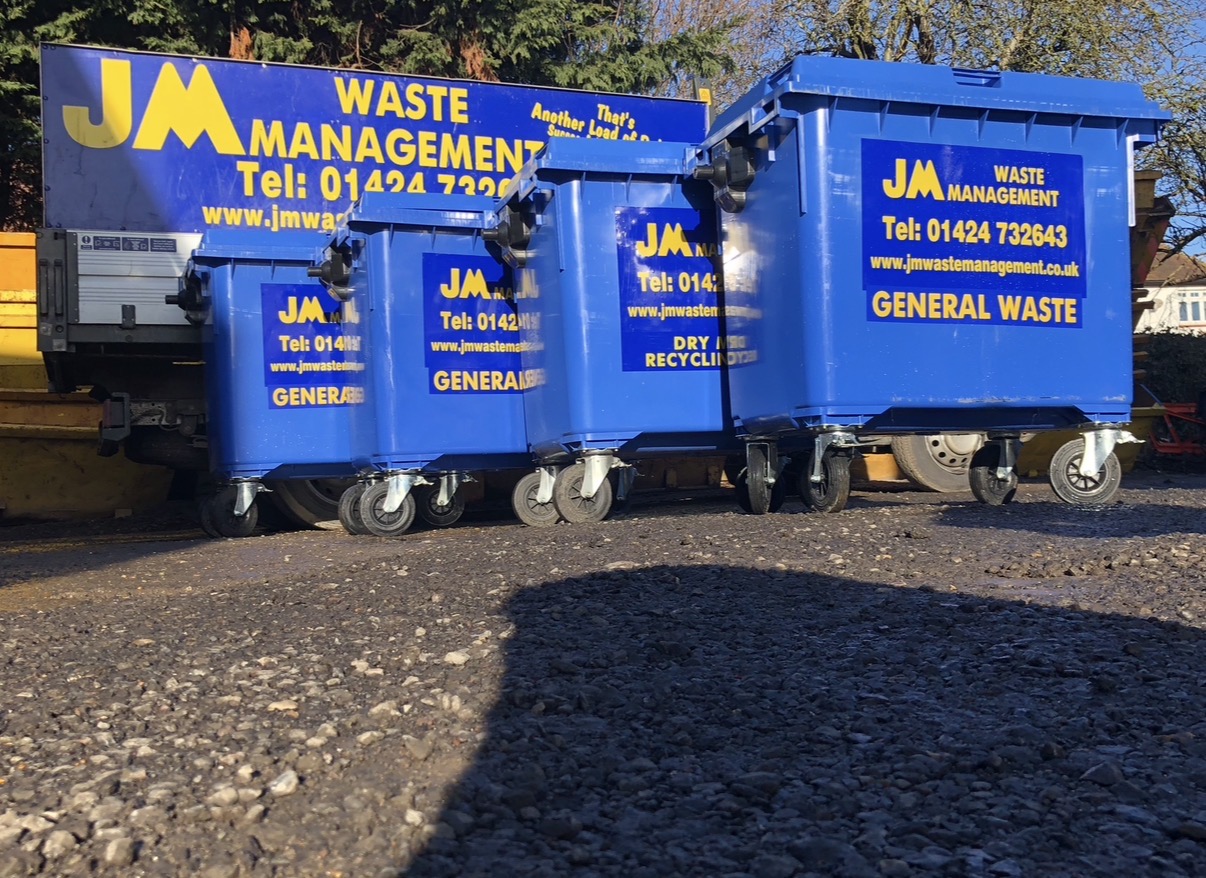
We supply clearly labelled commercial wheelie bins for general waste, DMR, glass, and food waste, and collect them on a schedule that suits your business. Our team can advise on the right bin sizes and collection frequencies for your specific waste volumes. Call us on 01424 732643 or get in touch for a free quote.